運用創新擴散理論分析台灣融合教育實施的挑戰

Applying the Diffusion of Innovations Theory to Analyze Challenges in the Implementation of Inclusive Education in Taiwan
運用創新擴散理論分析台灣融合教育實施的挑戰
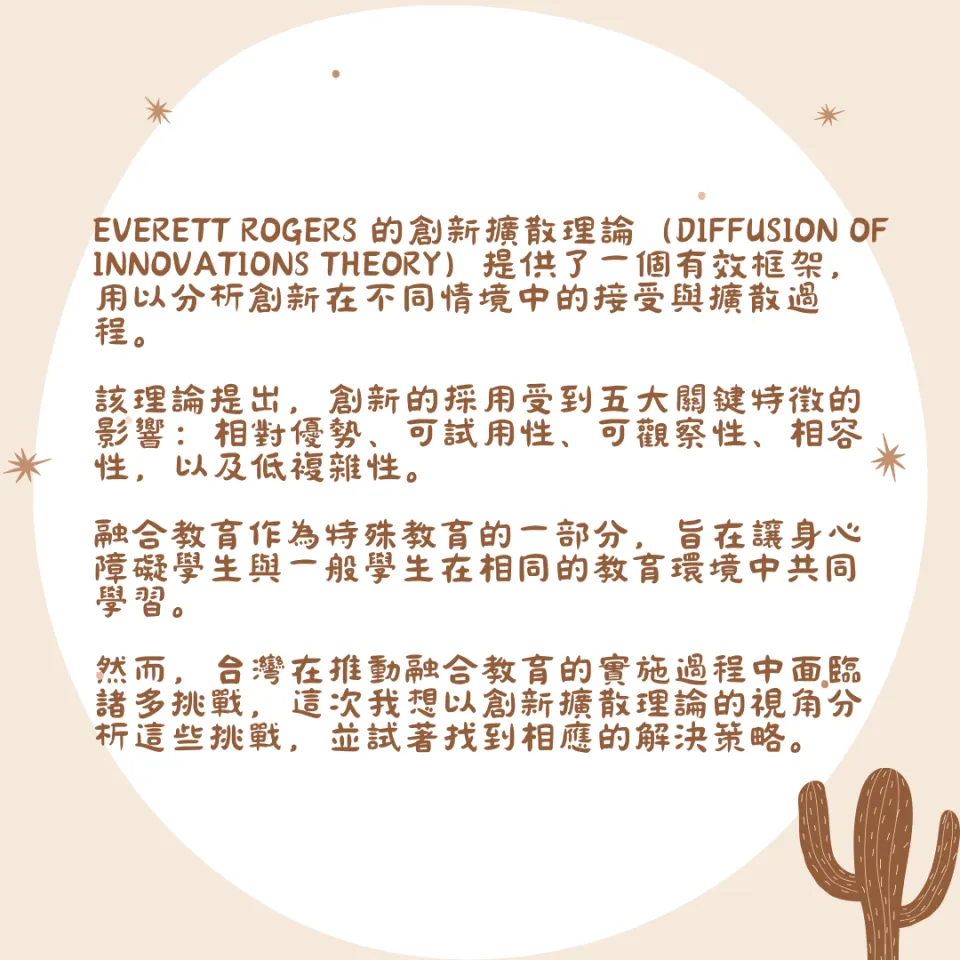
Everett Rogers’ Diffusion of Innovations Theory provides an effective framework for analyzing the process of adoption and diffusion of innovations in various contexts.
艾佛烈·羅傑斯(Everett Rogers)的創新擴散理論提供了一個有效的框架,用於分析不同情境下創新採用與擴散的過程。
The theory identifies five key characteristics that influence the adoption of an innovation: relative advantage, trialability, observability, compatibility, and low complexity.
該理論指出了五個關鍵特徵會影響創新被採用的可能性,包括相對優勢、可試驗性、可觀察性、相容性以及低複雜性。
As part of special education, inclusive education aims to integrate students with disabilities into the same educational environment as their peers.
作為特殊教育的一部分,融合教育旨在讓身心障礙學生與其同儕共同融入同一個教育環境。
However, the implementation of inclusive education in Taiwan faces numerous challenges.
然而,台灣在推行融合教育時面臨諸多困境。
By applying the lens of the Diffusion of Innovations Theory, we can systematically understand these challenges and identify strategies to address them.
透過運用創新擴散理論的視角,我們可以系統化地了解這些挑戰並制定應對策略。
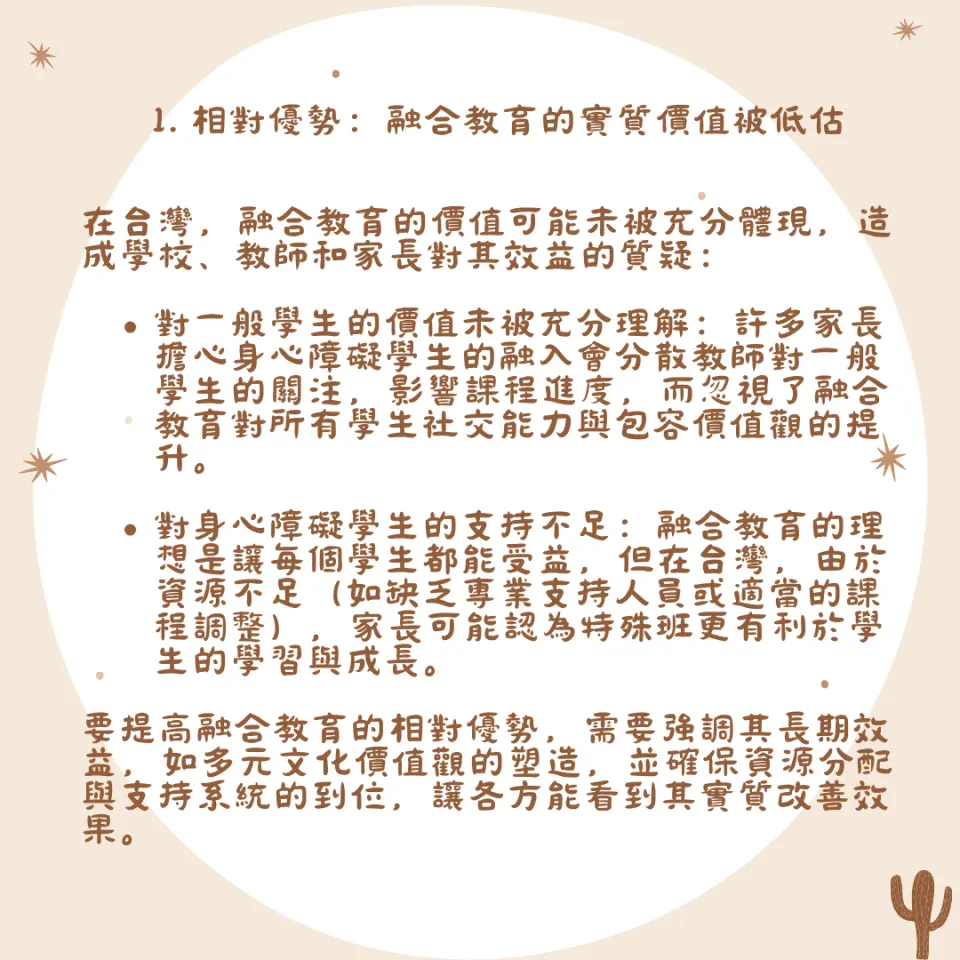
1. Relative Advantage: The Underestimated Value of Inclusive Education
1. 相對優勢:融合教育的價值被低估
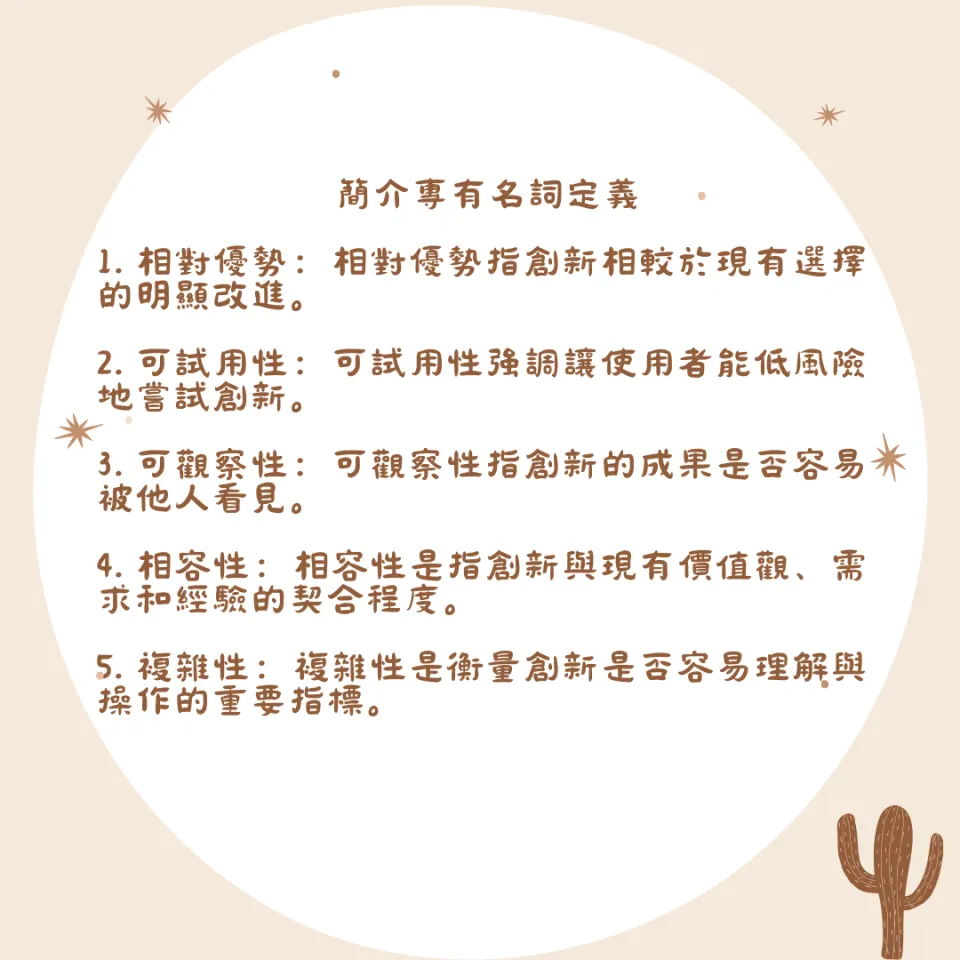
Relative advantage refers to the degree to which an innovation is perceived as superior to existing alternatives.
相對優勢指的是創新被認為優於現有替代方案的程度。
In Taiwan, the value of inclusive education is often underestimated, leading to skepticism among schools, teachers, and parents.
在台灣,融合教育的價值經常被低估,導致學校、教師與家長對其持懷疑態度。
Perceived impact on general education students: Many parents worry that the inclusion of students with disabilities might divert teachers’ attention and disrupt class progress, overlooking the long-term benefits of inclusive education, such as fostering social skills and instilling inclusive values in all students.
對普通學生的影響: 許多家長擔心身心障礙學生的融入可能分散教師的注意力並影響課堂進度,忽略了融合教育的長期益處,例如培養社交技能和灌輸包容價值觀。
Insufficient support for students with disabilities: Inclusive education ideally benefits all students, but due to resource constraints (e.g., lack of professional support personnel or curriculum adjustments), parents may believe that special classes better serve their children’s needs.
對身心障礙學生支援不足: 理論上融合教育應惠及所有學生,但由於資源有限(如缺乏專業支援人員或課程調整),家長可能認為特教班更符合孩子的需求。
To enhance the relative advantage of inclusive education, it is essential to emphasize its long-term benefits, such as shaping inclusive values, while ensuring adequate resource allocation and support systems to demonstrate tangible improvements.
為了提升融合教育的相對優勢,需強調其長期益處,例如塑造包容價值觀,同時確保資源分配和支援系統的完善,以展現實際改善效果。
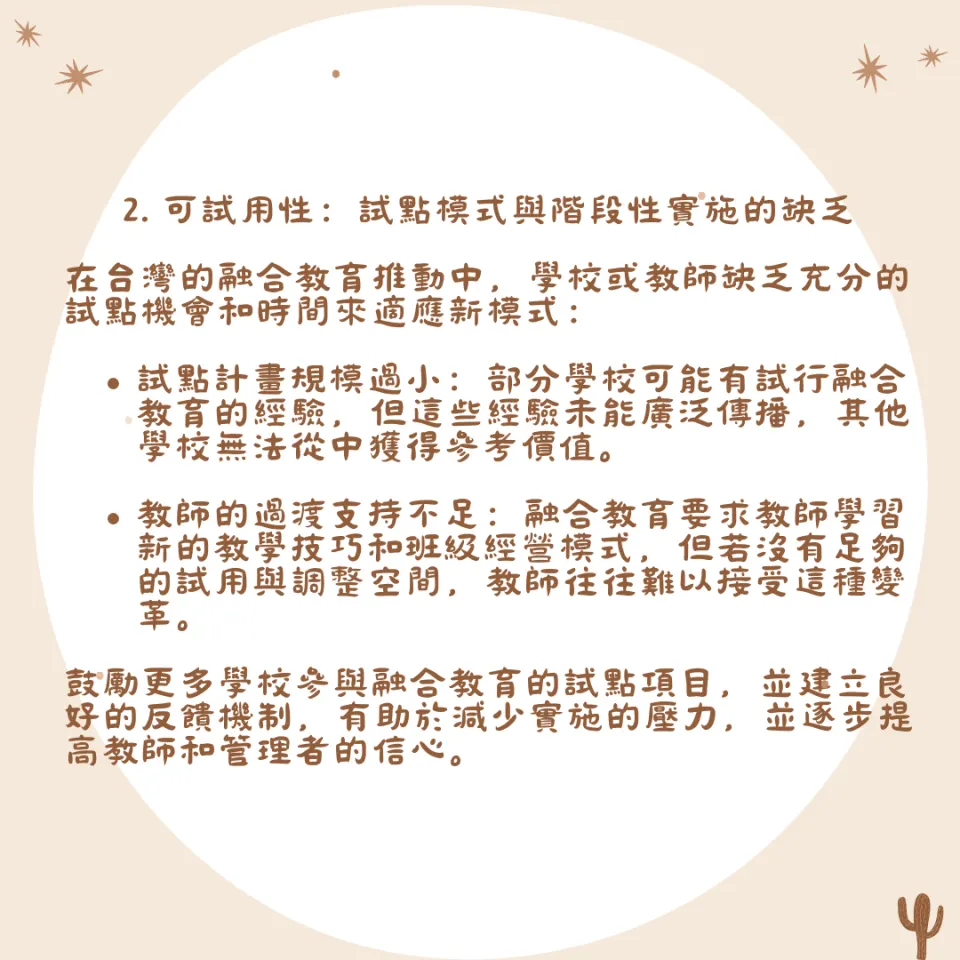
2. Trialability: Lack of Pilot Programs and Phased Implementation
2. 可試驗性:缺乏試點計畫與分階段實施
Trialability highlights the importance of allowing potential adopters to experiment with an innovation on a limited scale and with minimal risk.
可試驗性強調讓潛在使用者在有限範圍內低風險地嘗試創新的重要性。
In Taiwan, schools and teachers often lack sufficient opportunities to trial and adapt to inclusive education models.
在台灣,學校和教師經常缺乏充分的機會來嘗試和適應融合教育模式。
Small-scale pilot programs: While some schools have piloted inclusive education, these experiences are not widely shared, leaving others without valuable references.
小規模試點計畫: 雖然一些學校已試行融合教育,但這些經驗並未廣泛分享,導致其他學校缺乏參考範例。
Insufficient transitional support for teachers: Inclusive education requires teachers to learn new teaching strategies and classroom management methods. Without adequate time and space for trial and adjustment, educators may resist such changes.
教師過渡支援不足: 融合教育要求教師學習新教學策略與班級管理方法。若無足夠時間與空間進行試驗與調整,教師可能會抗拒變革。
Expanding pilot programs to include more schools and establishing effective feedback mechanisms can reduce implementation pressure and gradually build confidence among educators and administrators.
擴大試點計畫的覆蓋範圍並建立有效的回饋機制,可以減輕實施壓力並逐步提升教育者與管理者的信心。
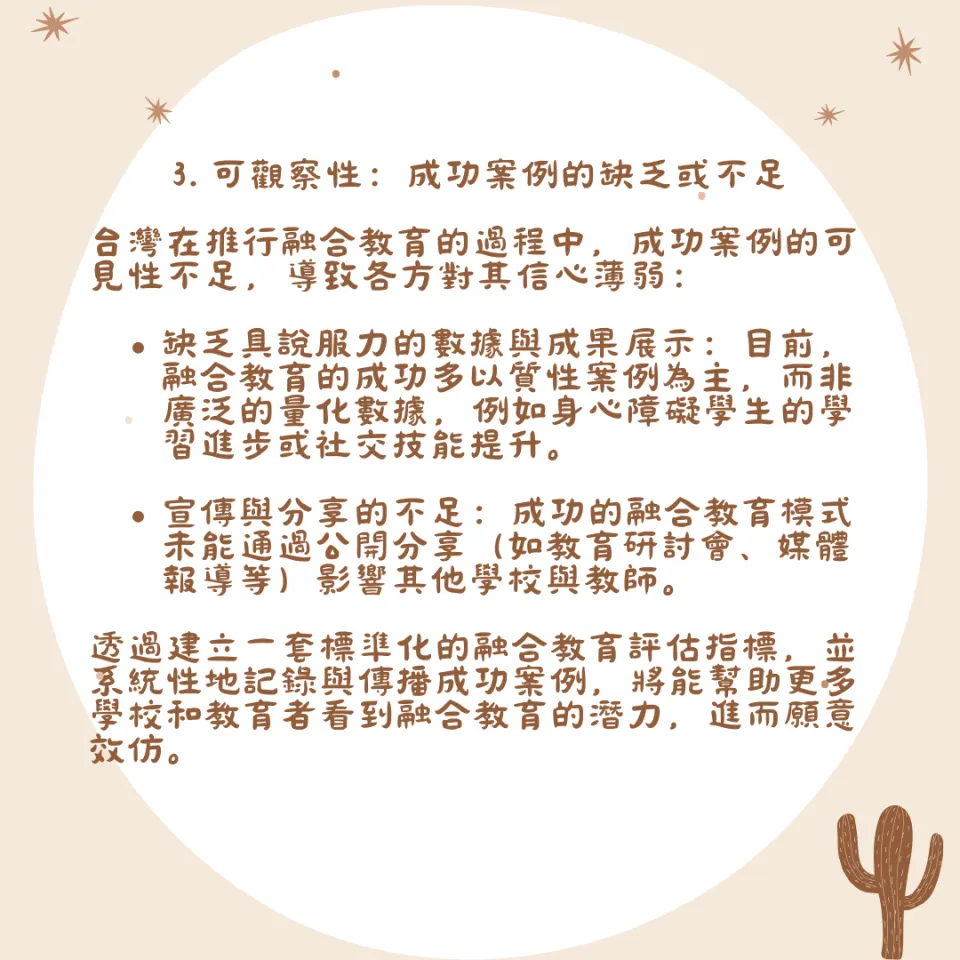
3. Observability: Limited Visibility of Successful Examples
3. 可觀察性:成功案例的可見性有限
Observability refers to the extent to which the results of an innovation can be seen by others.
可觀察性是指創新成果被他人看到的程度。
In Taiwan, the visibility of successful inclusive education programs is often low, hindering wider acceptance and adoption.
在台灣,成功的融合教育計畫通常可見度不高,阻礙了更廣泛的接受與採用。
Scarcity of public success stories: While some schools have effectively implemented inclusive education, these cases are rarely showcased through media or public platforms. This limits the exposure of other schools to positive outcomes.
成功故事的公開稀缺: 雖然部分學校成功推行了融合教育,但這些案例很少透過媒體或公共平台展示,導致其他學校難以接觸到正面成果。
Peer influence among educators: Teachers are more likely to adopt practices they see their colleagues succeeding with. A lack of observable peer success may contribute to skepticism or resistance.
教育者間的同儕影響: 教師更可能採用他們看到同事成功實施的做法。缺乏可見的同儕成功可能助長懷疑或抗拒情緒。
To address this, education authorities should actively promote and share best practices, leveraging teacher forums, school networks, and professional development workshops to enhance observability.
為了解決這一問題,教育當局應積極推廣與分享最佳實踐,利用教師論壇、學校網絡和專業發展工作坊來提高可觀察性。
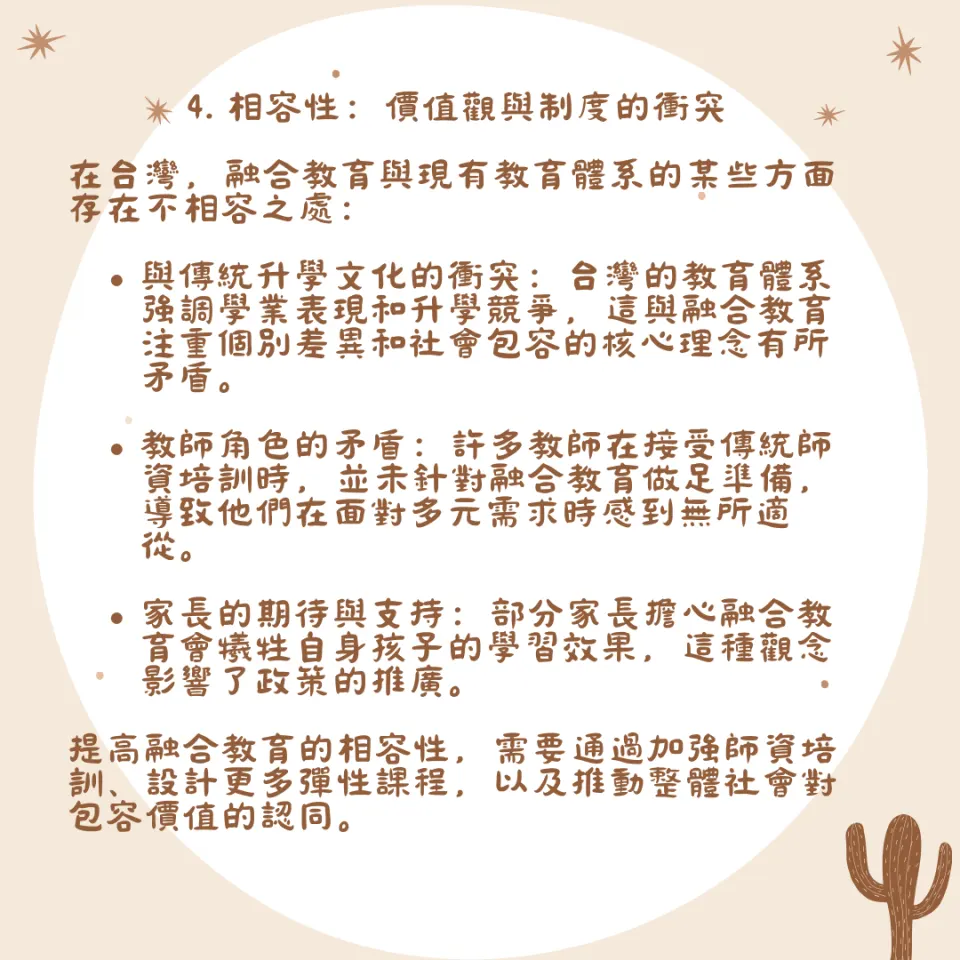
4. Compatibility: Misalignment with Existing Educational Systems
4. 相容性:與現有教育系統的不一致
Compatibility measures how well an innovation aligns with the values, experiences, and needs of its potential adopters.
相容性衡量創新與其潛在使用者的價值觀、經驗和需求的契合程度。
Taiwan’s inclusive education initiatives often struggle to align with the existing educational infrastructure and societal attitudes.
台灣的融合教育舉措經常難以與現有的教育基礎設施與社會態度相一致。
Rigid curriculum structures: The traditional, test-oriented curriculum in Taiwan makes it challenging to integrate inclusive education practices.
僵化的課程結構: 台灣傳統以考試為導向的課程,使融合教育的實踐整合變得困難。
Cultural attitudes toward disabilities: Deep-rooted societal stigmas surrounding disabilities can create resistance among stakeholders, including teachers and parents, to inclusive practices.
對身心障礙的文化態度: 圍繞身心障礙的根深蒂固社會汙名,可能讓包括教師與家長在內的利益相關者對融合實踐產生抵觸。
To improve compatibility, it is essential to adjust curriculums to include more flexible and inclusive elements while fostering societal awareness and acceptance of disabilities.
為提升相容性,需調整課程以納入更多靈活且包容的元素,同時促進社會對身心障礙的認知與接受。
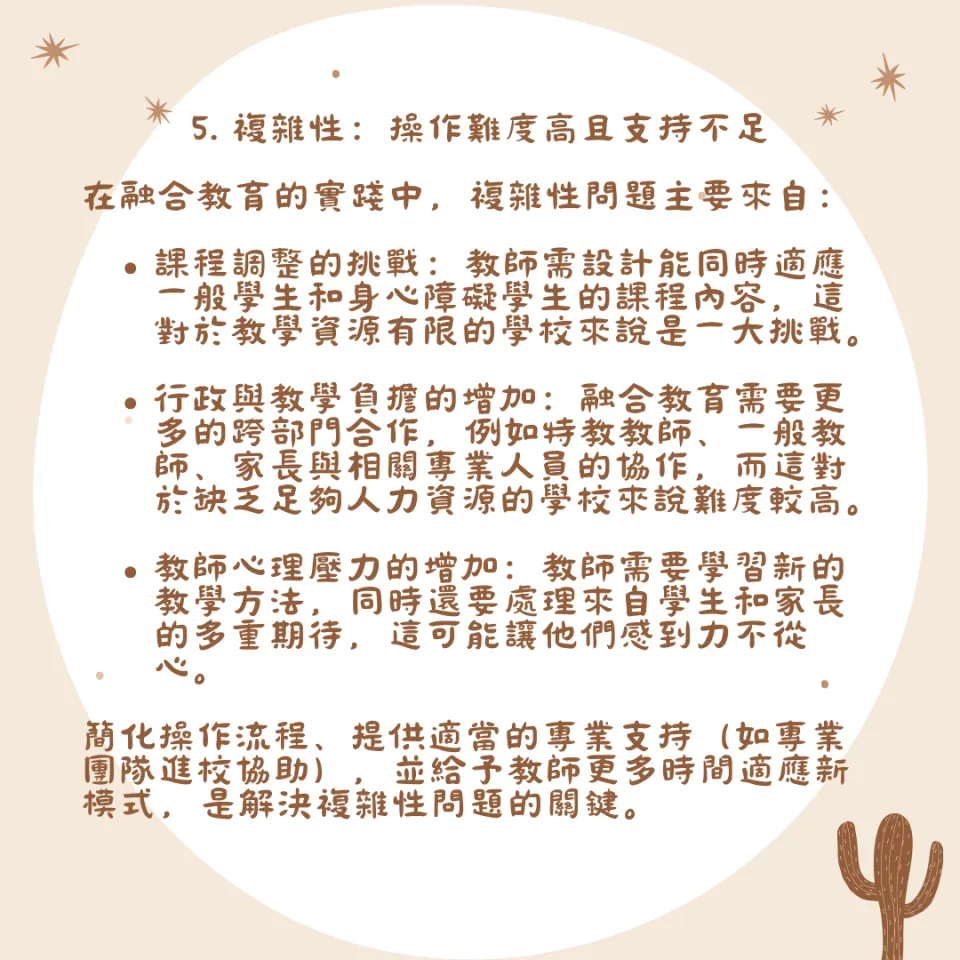
5. Complexity: Overwhelming Implementation Processes
5. 複雜性:實施過程過於繁瑣
Complexity describes how difficult an innovation is to understand or implement.
複雜性描述的是創新被理解或實施的難易程度。
Inclusive education in Taiwan often appears overly complex to educators and administrators, creating a barrier to adoption.
台灣的融合教育對教育者與管理者來說經常顯得過於複雜,形成採用的障礙。
Training overload: Teachers are required to learn multiple new skills, such as differentiated instruction, classroom management for diverse learners, and the use of assistive technologies.
培訓負擔過重: 教師需學習多項新技能,如差異化教學、多元學習者的班級管理,以及輔助技術的使用。
Administrative demands: Schools need to coordinate various resources, manage Individualized Education Programs (IEPs), and comply with numerous policies, which can overwhelm staff.
行政需求過多: 學校需協調各種資源,管理個別化教育計畫(IEP),並遵守多項政策,這可能讓教職員工不堪重負。
Simplifying procedures and providing step-by-step guides, as well as sustained support from experienced mentors, can reduce perceived complexity and encourage wider implementation.
簡化流程並提供分步指南,以及來自經驗豐富導師的持續支持,可以降低感知複雜性,促進更廣泛的實施。
Conclusion
結論
The Diffusion of Innovations Theory offers valuable insights into the challenges of implementing inclusive education in Taiwan.
創新擴散理論為分析台灣融合教育實施的挑戰提供了寶貴的洞見。
By addressing barriers related to relative advantage, trialability, observability, compatibility, and complexity, stakeholders can work towards creating an educational system that is more inclusive and equitable for all students.
通過解決相對優勢、可試驗性、可觀察性、相容性及複雜性相關的障礙,利益相關者可努力建立一個對所有學生更加包容與公平的教育系統。
Inclusive education is not merely an educational reform; it is a societal commitment to equity and diversity.
融合教育不僅僅是一項教育改革,更是一項對公平與多樣性的社會承諾。